Panel-to-panel application
Concealed connections for drawer and box assembly.
Use the connector family to evaluate drawer fronts, backs and sides, as well as other four-sided box structures. The correct model depends on joint direction, panel thickness and the machining route available in production.
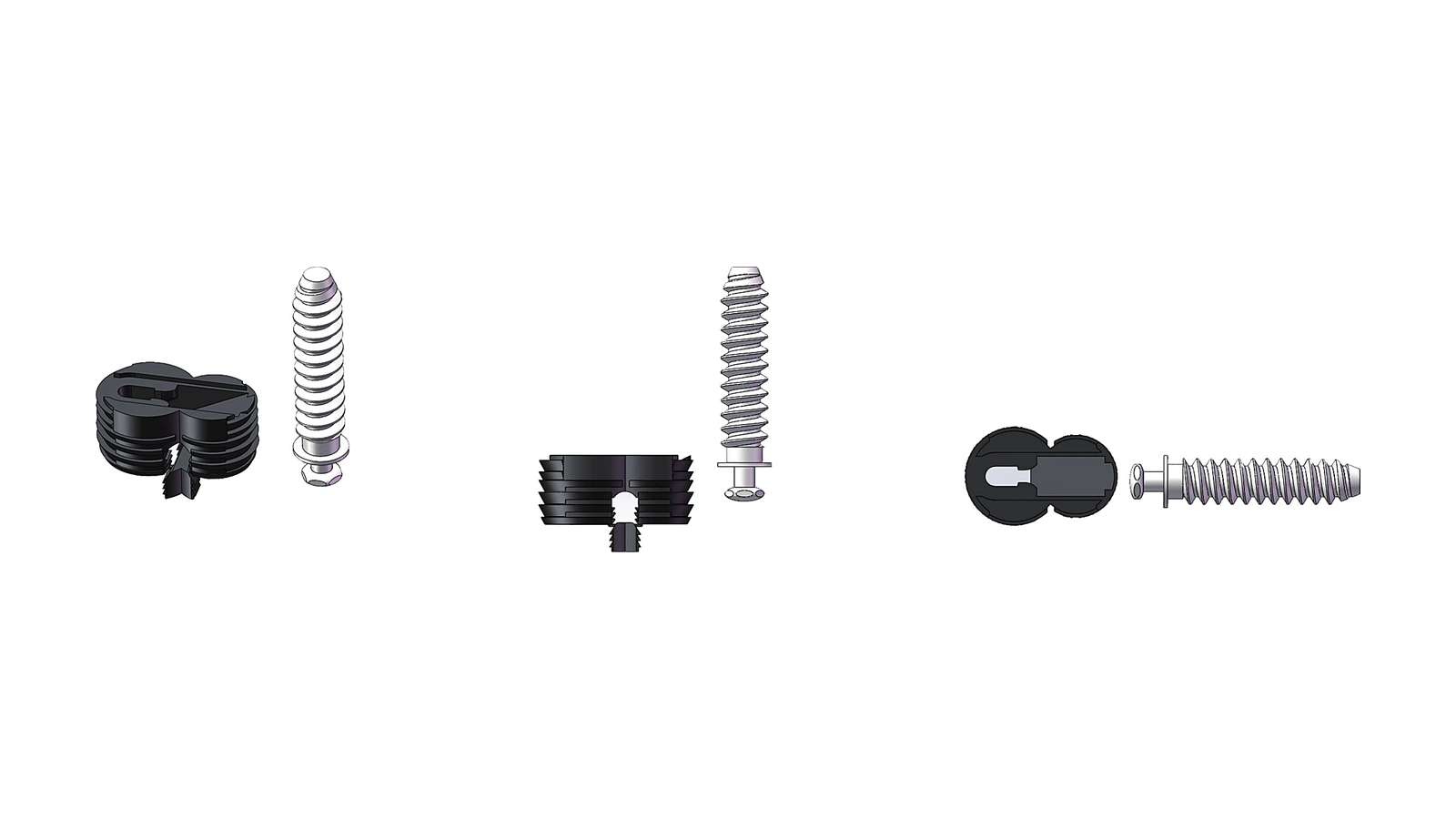
Engineering selection
Define every panel interface before choosing a model.
A drawer is a set of different joints, not one universal connection. Front, back, side and base interfaces may need different access and machining decisions.
Which panels meet: front-to-side, back-to-side or base-to-side
Actual panel material, thickness and edge condition
Available drilling or grooving process and tool access
Assembly sequence, connector access and visible-surface requirements
Pull, racking and repeated-assembly expectations for the finished drawer
Pilot fit and load validation in the production material
01 · Geometry
Name the joint
Share a drawing or photo showing which panel edges and faces meet.
02 · Process
Confirm machining
State whether drilling, grooving or both are available on the production line.
03 · Evidence
Test the real assembly
Validate fit, pull and racking behavior in the actual board and tolerance stack.
Engineering next step
Send the drawer or cabinet joint for a connector recommendation
Share your application, panel material, thickness and machining route so we can prepare the right sample discussion.